
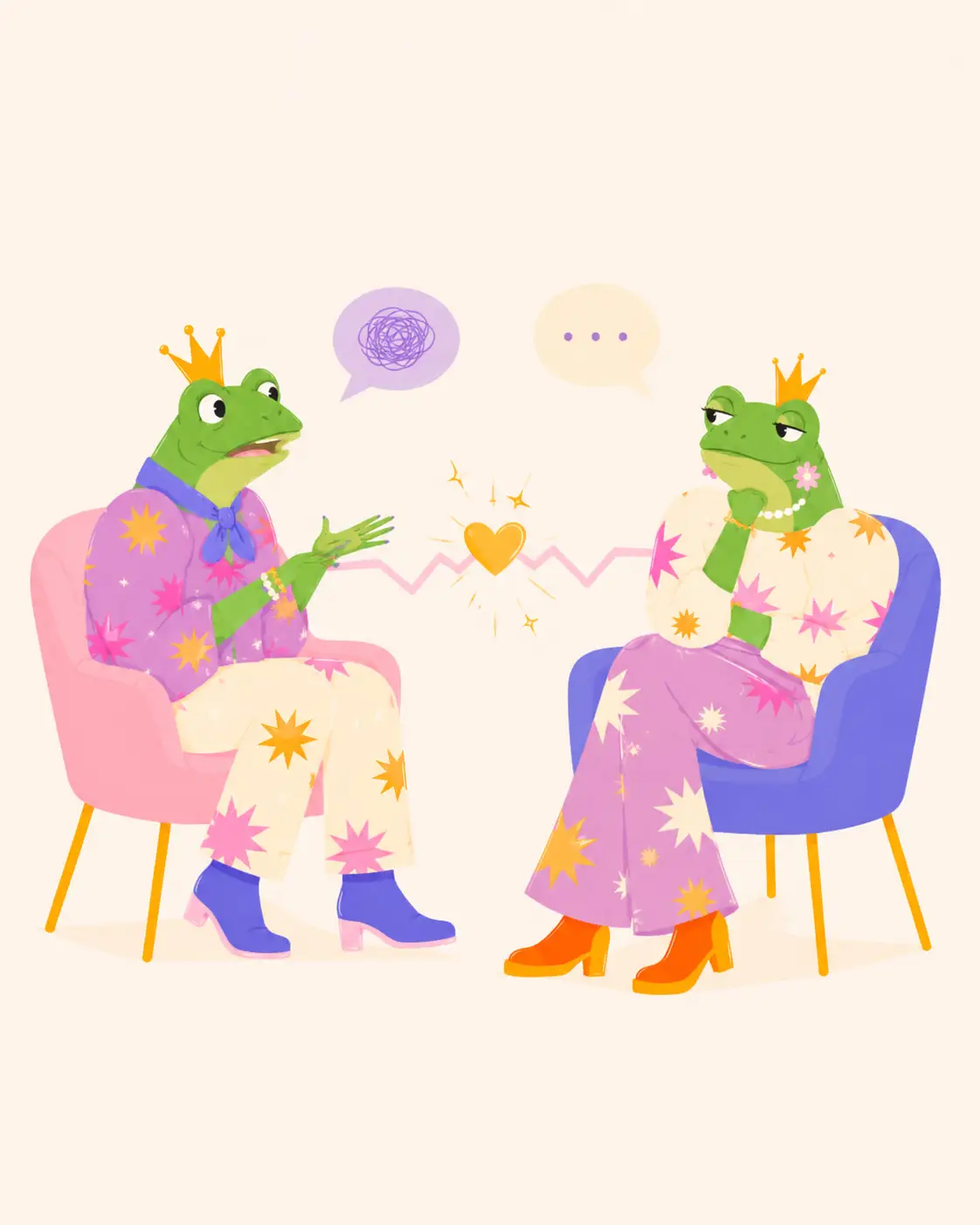
Let me tell you a story.
Not the version we give children, because children are still mercifully innocent enough to believe that a frog is only a frog, a prince is only a prince, and a princess is only a girl waiting for better lighting. This is the adult version.
The one where the frog has attachment wounds.
The prince has pride.
The princess has disgust.
And everyone is secretly waiting for love to rescue them from the exact part of themselves they refuse to meet.
I have seen this story many times in couples therapy. Not literally, of course. No one has yet arrived at my practice carrying a golden ball, although people do bring stranger things: screenshots, moral superiority, twelve years of resentment, and the firm belief that if I simply listen carefully enough, I will declare their partner the official problem.
This story is not one couple. It is many couples, disguised and gathered into one fairy tale because that is often the only way to tell the truth without betraying anyone. So let us begin. The Prince and the Princess came to therapy because they were tired. That is the word people use when they are still too proud to say desperate.
Tired of arguing.
Tired of silence.
Tired of feeling anxious in the relationship.
Tired of asking for reassurance.
Tired of being asked for reassurance.
Tired of sex becoming evidence.
Tired of no sex becoming evidence.
Tired of being needed.
Tired of not being wanted.
Tired of the same wound returning each week dressed as a new argument.
The Princess sat beautifully. Some people suffer beautifully. It is one of the more tragic human talents. The Prince sat beside her with the wounded dignity of a man who had mistaken longing for proof of virtue. He said, “I just want to feel wanted.” She said, “And I just want to breathe.”
There it was. A marriage in two sentences. Not the whole marriage, of course. There had been love. There had been tenderness. There had been beginnings, and beginnings are dangerous because they are full of lies we do not mean as lies.
At the beginning, the Prince thought the Princess’s beauty was peace. The Princess thought the Prince’s devotion was safety. Both were wrong, but romantically wrong, which is how most relationships begin.
01The frog had entered the room
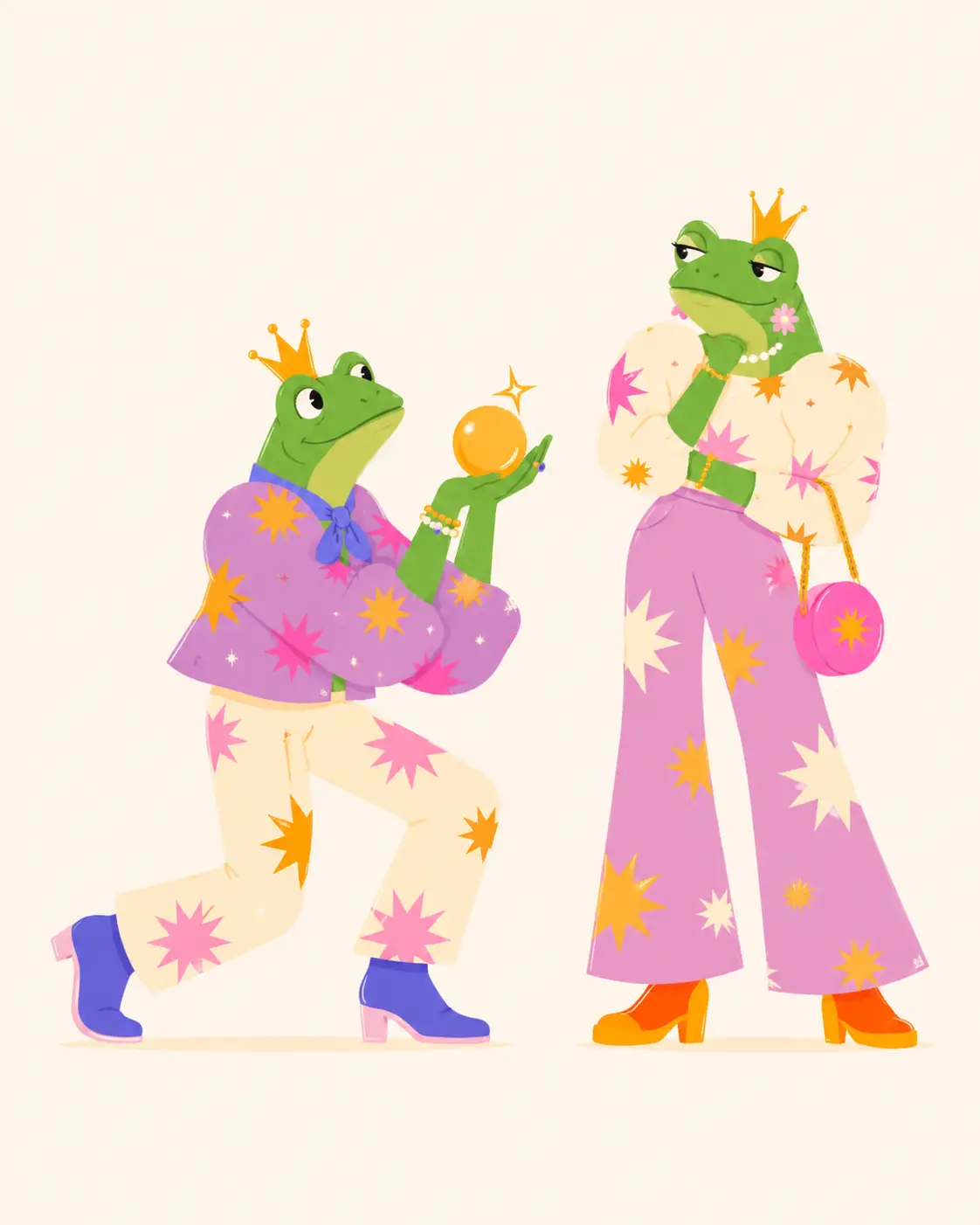
In the old fairy tale, the Princess loses her golden ball down a well. The golden ball is not just a toy. Nothing in a fairy tale is just itself. That is why fairy tales are more honest than most relationship advice. The golden ball is the shining fantasy of love before the underground opens. It is the dream that love will make us whole without making us uncomfortable.
That we will be chosen without being exposed. That our partner will admire our beautiful parts and politely ignore the swamp. Then the ball falls. Of course it falls. Every serious relationship eventually drops the golden ball into the well. The well is where the hidden things live.
Need.
Dependency.
Sexual shame.
Childhood hunger.
Fear of abandonment.
Fear of engulfment.
The mother wound.
The father wound.
The invisible labour.
The old belief that love must be earned, performed, controlled or survived.
And from that well comes the frog. Wet. Awkward. Demanding. Impossible to romanticise. The frog retrieves the ball, but he does not do it for free. He wants to sit beside the Princess. He wants to eat from her plate. He wants to enter her private room. He wants closeness. The Princess is horrified. And here, finally, we leave childhood literature and enter marriage.
Because the frog is the part of love that arrives after the fantasy collapses. The part that says: You wanted romance. Lovely. Now tell me what you do when someone needs you too much. You wanted devotion. Very good. Now tell me what happens when devotion becomes a bill. You wanted intimacy. Excellent. Now tell me why being truly needed makes your body recoil.
You wanted to be loved. Of course. Now explain why you cannot ask for love without turning into a prosecutor. This is where couples therapy begins. Not with communication skills. Communication skills are useful, but let us not flatter ourselves. Many couples communicate constantly. They communicate through silence, sighs, sex, withdrawal, sarcasm, calendar sabotage, weaponised politeness, and the ancient marital language of loading the dishwasher as if burying a body.
The problem is not that couples do not communicate. The problem is that by the time they arrive in therapy, every sentence has a ghost underneath it. “I’m fine” means, “I am preparing my evidence.” “Do whatever you want” means, “Choose me without making me beg.”
“I need space” means, “I am overwhelmed and possibly also punishing you.” “You’re too needy” means, “Your longing feels like a threat.” “You don’t care” means, “I cannot feel your love when you disappear.” And “after everything I’ve done for you” means, “I gave with a hidden invoice, and now I am here to collect.”
02The Prince was not only anxious
 relationship anxiety" loading="lazy" />
The Princess called the Prince needy. People use that word when someone else’s longing has started to feel like an invasion. Needy. Such a small, ugly word for a place in the human soul that is often very young and very frightened. The Prince hated it. Of course he did. No one wants to discover that the thing they call love is experienced by their partner as pressure.
He said, “I am asking for the bare minimum.” The Princess said, “No. You are asking me to prove something you never finally believe.” There are sentences in therapy that do not sound dramatic but rearrange the oxygen in the room. This was one of them. The Prince was not lying. He did want love. He did want closeness. He did want to feel chosen.
But by the time his longing reached the Princess, it had travelled through shame, panic, memory and accusation. So it no longer sounded like longing. It sounded like a demand. It did not say: “I miss you.” It said: “You never want me.” It did not say: “I feel frightened when you go quiet.”
It said: “You’re cold.” It did not say: “Can we find each other again?” It said: “After everything I do, this is what I get?” Relationship anxiety is rarely polite. It may begin as fear, but if fear feels humiliated for long enough, it often becomes cross-examination.
The anxious partner says they want reassurance. But often they want something larger, more impossible, almost religious. They want the partner to erase the old wound. They want today’s text message to repair childhood. They want one embrace to silence every ancient suspicion that they are too much, not enough, replaceable, forgettable, ridiculous for needing so much.
So they ask. Then ask again. Then ask differently. Then ask with tears. Then ask with anger. Then ask why the answer sounded slightly less warm this time. By now, the Princess is no longer being loved. She is being examined. And no one desires the person who is conducting their emotional audit. This is the tragedy of relationship anxiety: the anxious person reaches for closeness in a way that makes closeness less free.
And love that is not free begins to smell like duty. Duty can maintain a household. It cannot produce tenderness.
03The Princess was not only avoidant
The Prince called the Princess cold. People use that word when another person’s boundary feels like abandonment. Cold. But cold is not always absence of feeling. Sometimes cold is feeling that has frozen because warmth was once punished, claimed or used. The Princess did not feel empty. She felt crowded.
She said, “When he asks for reassurance, I don’t feel loved. I feel watched. I feel like I have to perform affection under supervision.” That sentence should be printed and handed to half the couples who search for anxious attachment, avoidant partner, relationship anxiety or couples therapy at 2am after another argument that began with a tone and ended with someone sleeping too close to the edge of the bed.
The person asking for reassurance thinks: I am asking for love. The person receiving the question feels: I am being tested. And tenderness does not grow well under surveillance. The Princess had her own old story. Somewhere in her life, need had not felt innocent. Need had meant pressure. Obligation. Emotional debt. A hand reaching for more than she had offered. A person who received one yes and then treated every future no as betrayal.
So she learned the elegance of distance. At first, she called it independence. Then she called it needing space. Then she called it being busy. Then she called it self-protection. Eventually, if no one helped them, it would become contempt. Contempt is what distance becomes when it loses its grief. And disgust?
Disgust is even more complicated. Sometimes disgust is cruelty. Sometimes it is superiority. But sometimes disgust is a boundary that was never allowed to speak in words. The body says no before the mouth can afford the consequences. This is why couples therapy must be careful. We must not shame the anxious partner for needing.
But we must not force the Princess to call pressure love. We must not shame the avoidant partner for needing space. But we must not let disappearance dress itself as emotional regulation. Both people are protecting something. Both people are also injuring something. That is where the work lives.
04Need is not the problem. Pressure is.
This is one of the most important distinctions in couples therapy. Need says: “I want to feel close to you.” Pressure says: “You must make me feel safe right now.” Need says: “I miss us.” Pressure says: “You owe me warmth because I am suffering.” Need says:
“I feel scared.” Pressure says: “My fear is now your responsibility.” Need invites. Pressure corners. Need can create intimacy. Pressure creates resistance, resentment or performance. The Prince did not have to stop needing. Only dead people and very defended people have no needs, and neither makes a good partner.
He had to learn to bring his need without turning the Princess into the manager of his nervous system. The Princess did not have to become endlessly available. That is not love. That is emotional employment with no pension. She had to learn to set boundaries without humiliating the part of him that was already ashamed.
Because the moment his need became pressure, she felt trapped. And the moment her boundary became contempt, he felt worthless. This is the loop.
One reaches.
The other recoils.
One asks for proof.
The other feels tested.
One becomes louder.
The other becomes smaller.
One calls it love.
The other calls it suffocation.
Both feel alone.
Researchers often describe one version of this as a demand-withdraw pattern, where one partner pressures, demands or pursues while the other avoids or withdraws; this pattern is consistently associated with relationship dissatisfaction (ScienceDirect).
But the Prince and Princess did not need a research paper to know this. They had lived the evidence. In kitchens. In cars. In bed. In those dreadful Sunday silences where two people who once chose each other now move around the house like disappointed diplomats.
05The love invoice
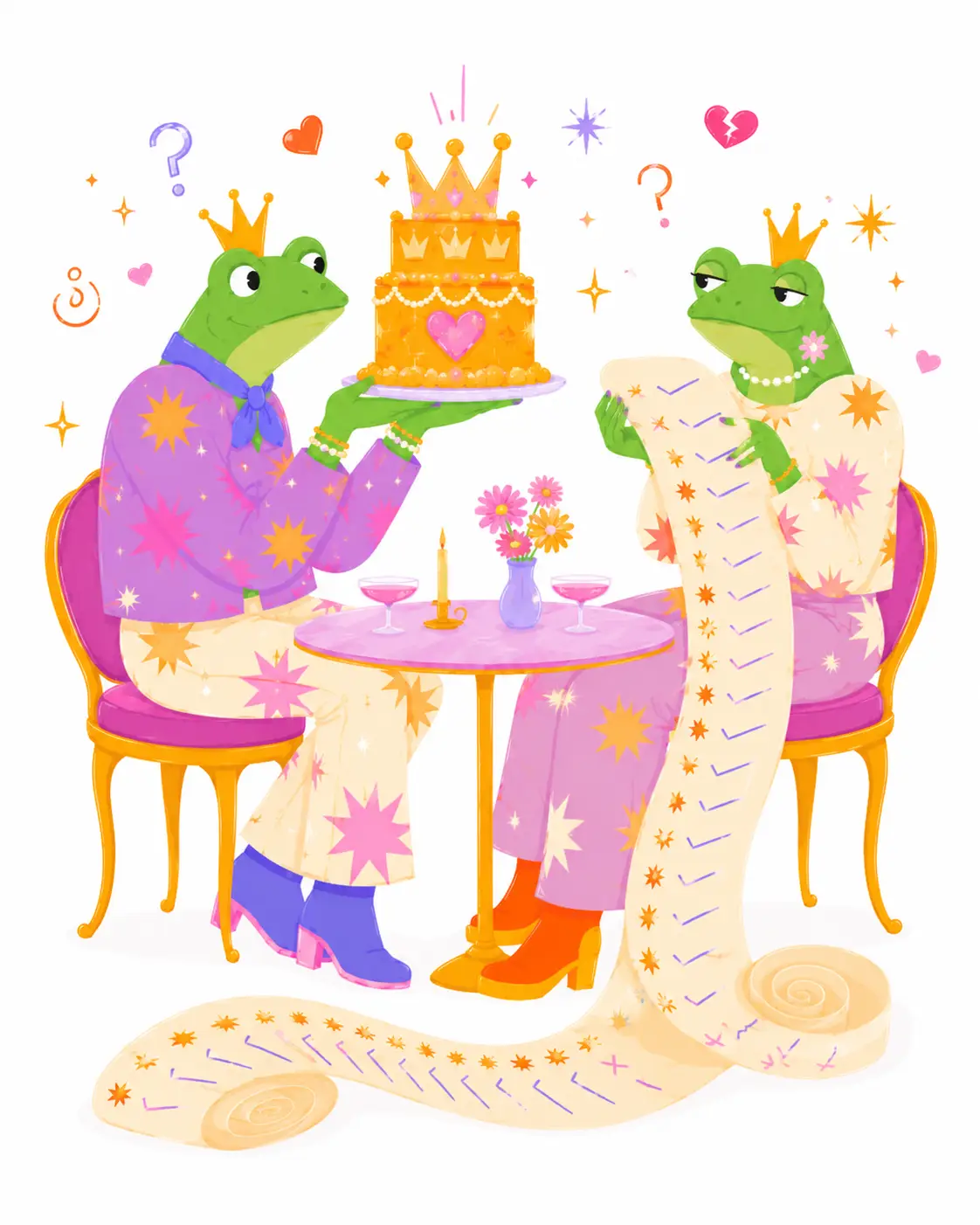
Then came the sentence that often appears when resentment has matured and put on a suit. The Prince said: “I have done everything for her.” The Princess laughed. Not because it was funny. Because sometimes a laugh is the last civilised thing before a scream. She said: “Exactly. Everything has a receipt.”
There it was. The love invoice. The love invoice is what happens when care secretly becomes a contract. I supported you, so now you should desire me. I listened, so now you should trust me. I stayed, so now you should be grateful. I sacrificed, so now you should not disappoint me. I carried this family, so now you should notice without being told.
I became indispensable, so now you are not allowed to leave. The frightening thing is that the giving may have been real. The kindness may have been real. The love may have been real. But underneath it, somewhere quiet and ashamed, a receipt was printing. And one day, usually during a fight about housework, sex, money, parenting, phones, or a mother-in-law who has somehow become the emotional director of the marriage, the receipt is presented.
After everything I have done for you. Nothing says romance like an itemised emotional bill. But this is not a joke, not really. People give with invoices when they do not trust love to arrive freely. They think: If I am useful enough, I will be safe. If I give enough, I will be chosen. If I become necessary, I cannot be abandoned.
If I suffer beautifully, someone will finally understand the bill. This is how many people confuse being needed with being loved. Being needed can feel intoxicating at first. It gives a role, a place, a certain tragic importance. But being needed is not the same as being loved. Being useful is not the same as being seen.
Being indispensable is not the same as being cherished. And self-abandonment, however elegantly performed, eventually sends an invoice.
06The Frog Princess
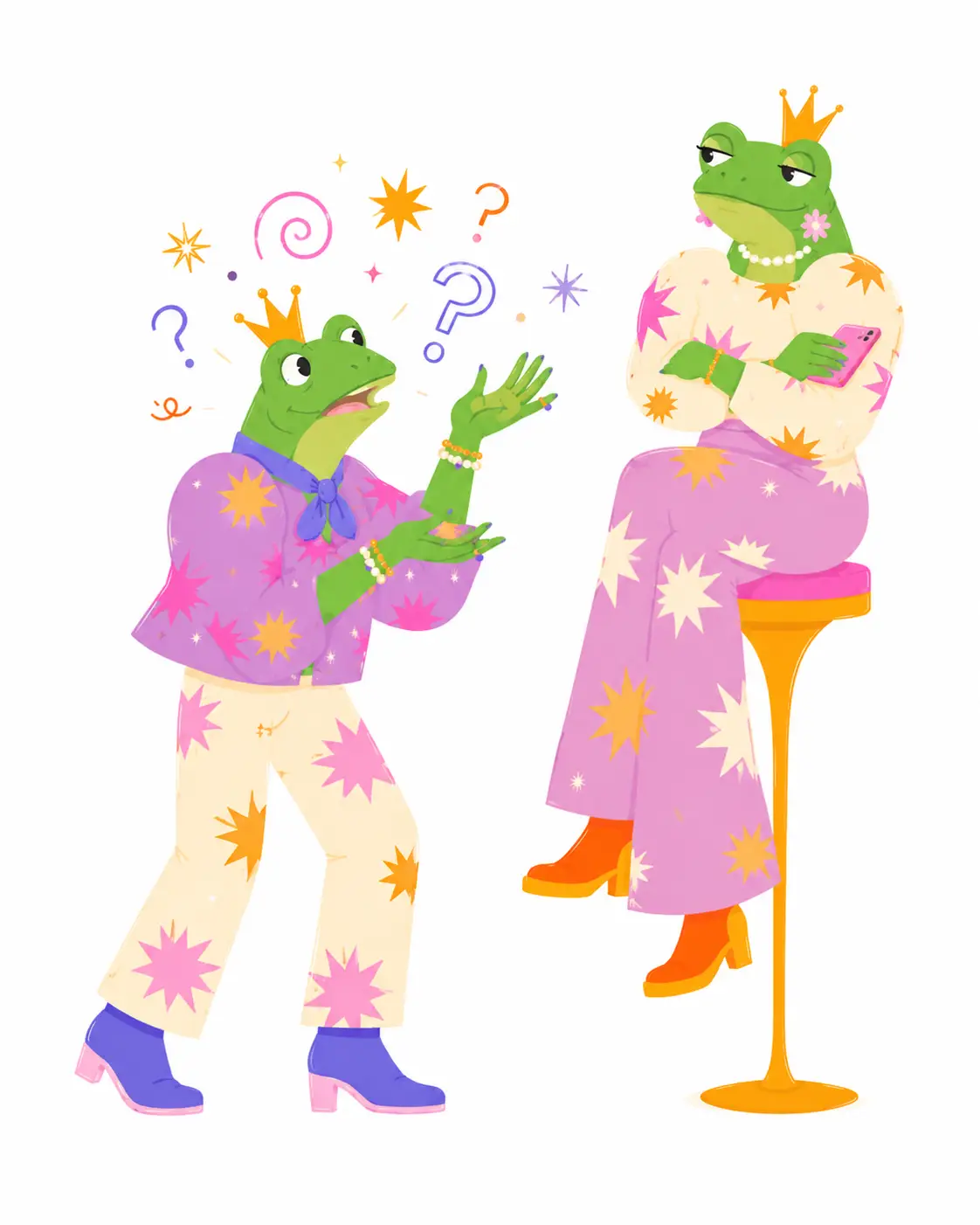
There is another frog story, and in some ways it is more devastating. In the Russian tale, the Princess herself is the frog. Hidden. Underestimated. Disguised. Magical, but not yet recognised. This is the story of the partner who becomes useful instead of visible. In real life, the Frog Princess is often the one who carries the invisible kingdom.
The children’s appointments.
The food.
The moods.
The birthdays.
The school forms.
The family messages.
The emotional temperature of the home.
The social calendar.
The apology that has to happen after the argument.
The fact that the Prince is tired, stressed, hungry, avoidant, ashamed, defensive, secretly tender, badly mothered, or impossible before coffee.
She knows everything. This is her genius and her prison. The Prince says, “But I appreciate her.” Perhaps he does. But appreciation is not repair. Appreciation says: “Thank you for carrying all this.” Repair says: “I should not have let you carry it alone.”
A relationship can be full of gratitude and still be unjust. That is a sentence worth sitting with.
Many resentful partners are not asking for praise. Praise is what people give when they want the structure to remain the same but sound nicer. They are asking for the structure to change. They are asking to stop being the floor on which someone else stands. They are asking to exist before they collapse.
One of the saddest sentences in couples therapy is: “I just wanted them to notice.” Underneath it is a much more naked sentence: “I wanted to matter before I became unbearable.”
07Couples therapy is not emotional court
The Prince and the Princess both wanted justice. This is understandable. When we are hurt, we do not simply want to be healed. We want someone to witness the crime. Sometimes we want the therapist to become judge, priest, historian, detective and executioner. We want the record corrected. We want the other person to see, finally, how patient we have been, how lonely, how reasonable, how quietly heroic.
But couples therapy is not emotional court. If the room becomes a courtroom, each partner becomes a lawyer for their own innocence. And innocence is a poor substitute for intimacy.
You can win the case and lose the relationship. People do it every day.
The better question is not: Who is right? The better question is: What happens between you when neither of you feels safe? The Prince pursued because distance felt like abandonment. The Princess withdrew because pursuit felt like pressure. His pursuit made her feel trapped. Her withdrawal made him feel unwanted.
His panic became accusation. Her fear became distance. His accusation proved to her that closeness was dangerous. Her distance proved to him that he was unloved. Round and round. Two intelligent adults. One ancient swamp.
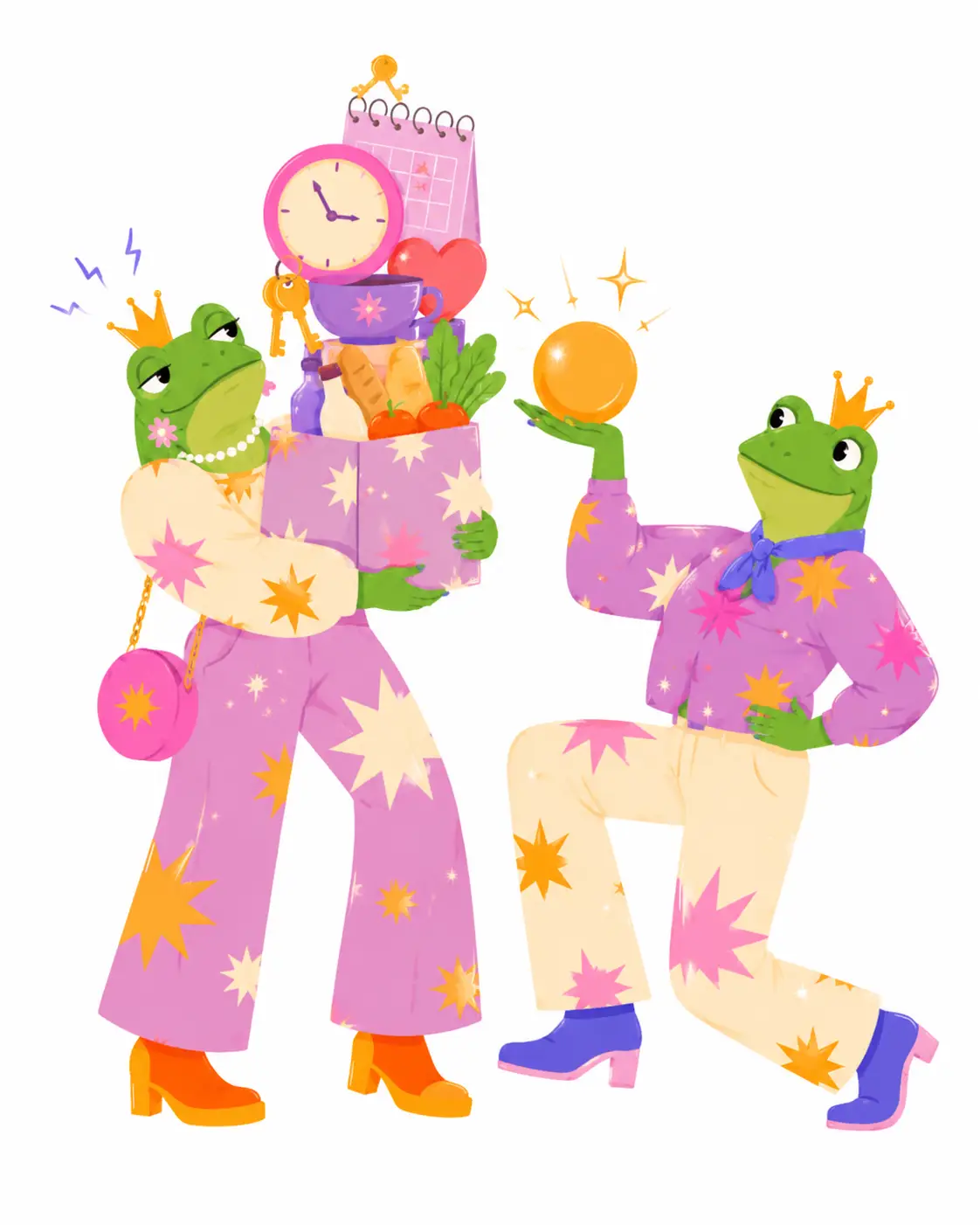
This is the anxious-avoidant cycle in its ordinary clothes. No villain. No saint. Just two people making each other suffer through the very strategies that once helped them survive.
08What the frog is really asking
The frog is not asking: Will you love the worst version of me forever while I do no work? That is not romance. That is hostage-taking with candles. The frog asks something more difficult: Can the ashamed part of me be seen without being mocked? Can the needy part of me ask without grabbing? Can the avoidant part of me take space without disappearing?
Can the resentful part of me stop calling silence maturity? Can the useful part of me stop confusing exhaustion with love? Can the frightened part of me stop turning fear into evidence? Every couple has a frog. Some frogs wear crowns. Some frogs wear competence. Some frogs wear sarcasm. Some frogs wear “I’m fine.”
Some frogs wear good manners. Some frogs wear a linen dress, a professional title, a wedding ring, a gym body, a spiritual vocabulary, or the face of someone who insists they are very relaxed while slowly dying of resentment. The frog is not the enemy. But the frog must not rule the kingdom.
09What changes when therapy works
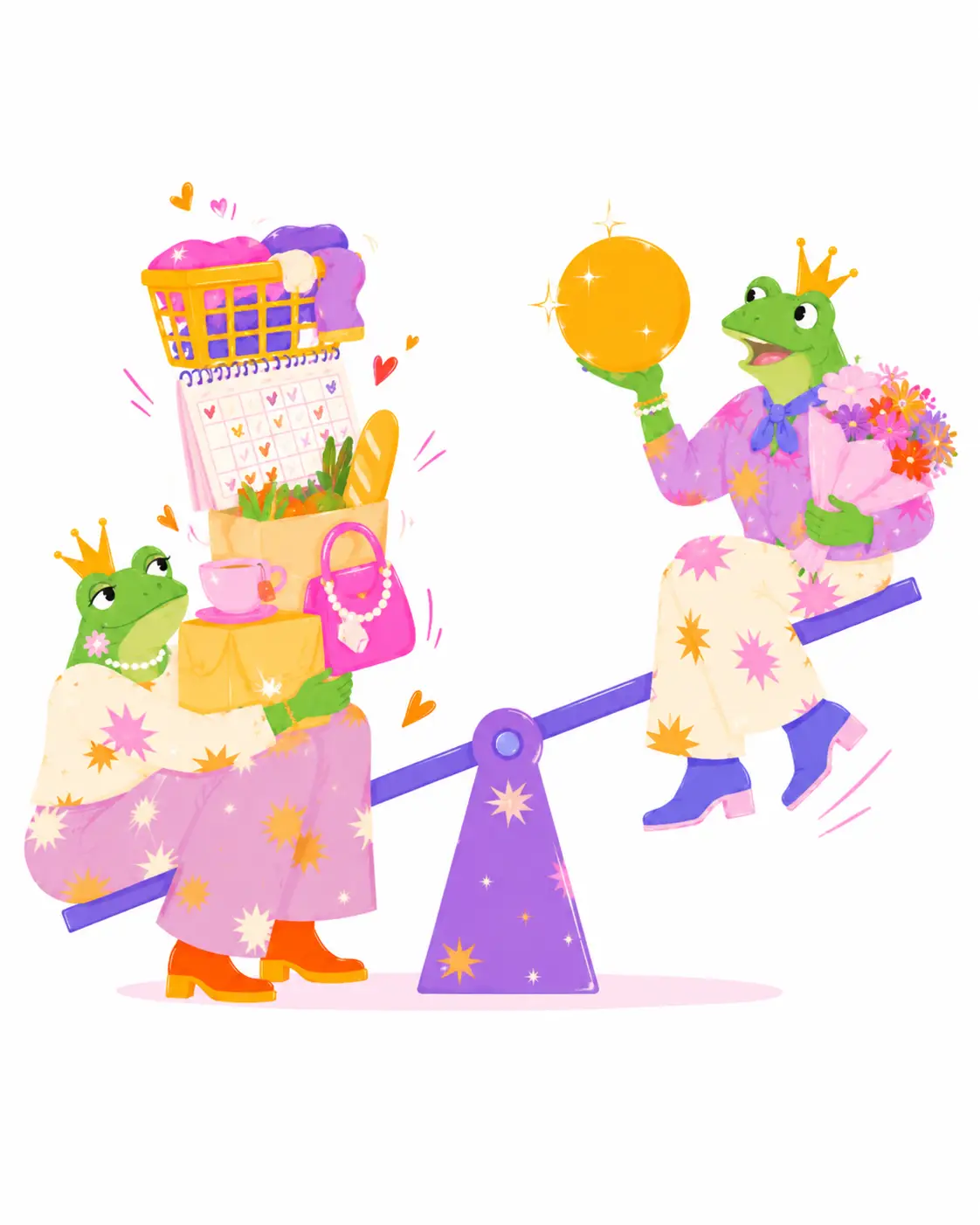
Good couples therapy does not teach people to speak like emotionally literate robots. “I hear that this is your truth.” Beautiful. Dead on arrival in most kitchens. People need language that can survive real life. The Prince learns to say: “I am scared I do not matter to you right now.”
Instead of: “You never care about me.” The Princess learns to say: “I am feeling pressured, and I need us to slow down.” Instead of: “You are too needy.” The anxious partner learns to say: “I can feel myself wanting to demand reassurance. I do not want to make my fear your prison.”
The avoidant partner learns to say: “I am flooded. I need twenty minutes. I am coming back.” The resentful partner learns to say: “I have been giving more than I could freely give, and now I am angry. I do not want to punish you for a contract I never spoke out loud, but something has to change.”
This is what mature love sounds like. Not polished. Not cinematic. Not always pretty. But real. Emotionally Focused Couples Therapy has research support for couple distress, and attachment-based couple work helps explain why partners often pursue, protest, shut down or withdraw when the bond feels threatened (PubMed).
Still, no model works if both partners secretly hope the other one will do all the transforming. The frog cannot be the only creature under examination. So must the Prince. So must the Princess. So must the one who calls anxiety love. So must the one who calls avoidance peace. So must the one carrying the entire kingdom in one tote bag and wondering why she is tired.
10The part fairy tales leave out
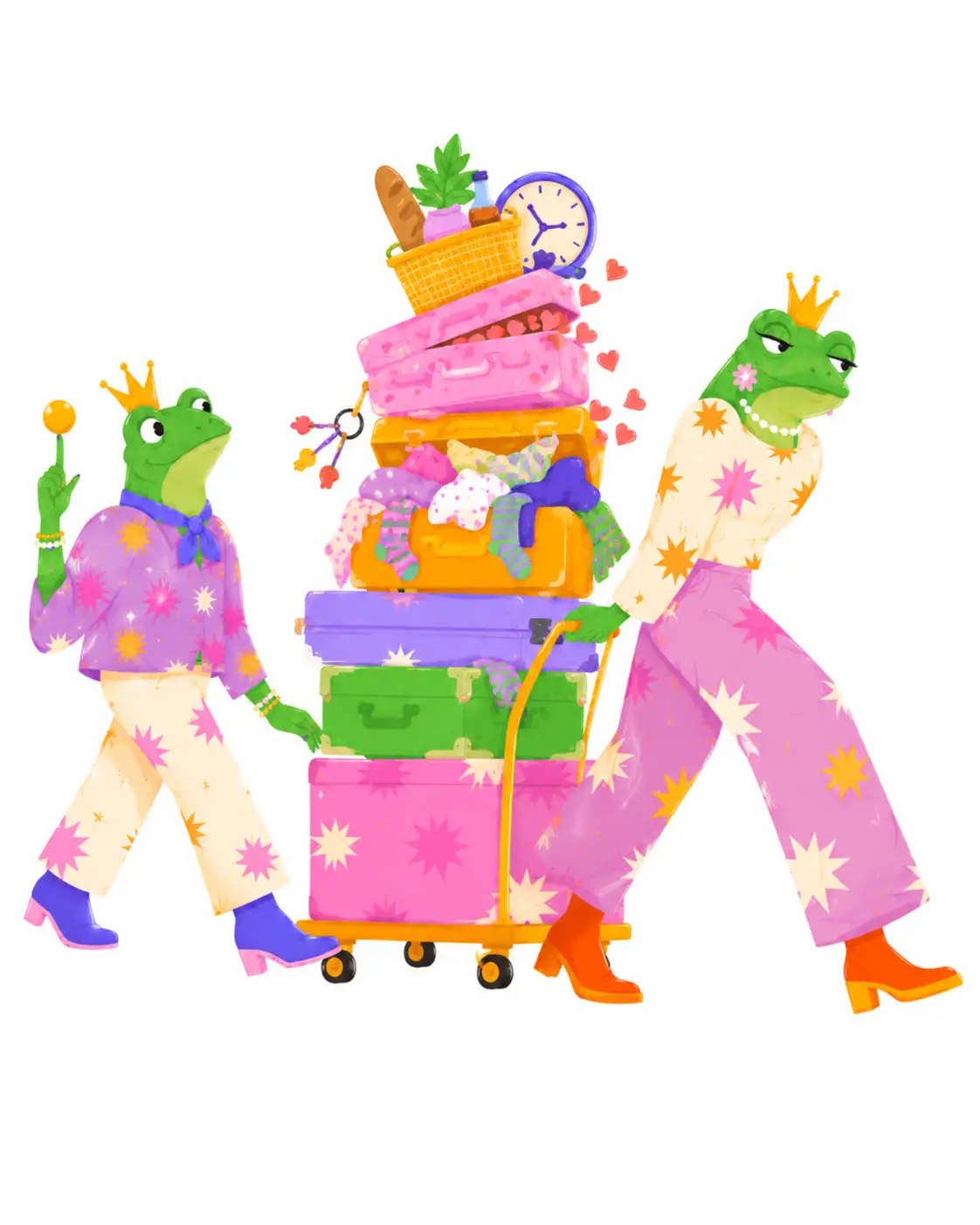
Fairy tales are efficient because they are not married. A kiss. A transformation. A wedding. A neat ending. Real relationships are more humiliating. The Prince does not become secure because the Princess gives one perfect reassurance. The Princess does not soften because the Prince makes one good apology.
The frog does not disappear because everyone understands the metaphor. The work is repetitive.
You notice the panic.
You pause.
You fail.
You repair.
You try again.
You stop treating your partner like the parent who failed you.
You stop treating your partner’s need like a prison sentence.
You stop giving with an invoice.
You stop calling withdrawal peace.
You stop calling pressure love.
You stop calling resentment wisdom.
You stop calling self-abandonment kindness.
This is not glamorous. It is better than glamorous. It is adult.
11If you are the Prince
Ask yourself: When I ask for closeness, am I inviting or cornering? When I feel unwanted, do I become vulnerable or accusing? Am I asking my partner to reassure me, or to rescue me from an old wound? What do I do with the part of me that feels ashamed of needing love? Can I say, “I am scared,” before I say, “You never”?
Try this: “I am feeling anxious and I can feel myself wanting to pressure you. I do not want to do that. Can we find each other for a moment?” That is not weakness. That is longing with dignity.
12If you are the Princess
Ask yourself: When my partner needs me, do I feel tenderness, pressure, guilt, fear or disgust? Do I set boundaries clearly, or do I make my partner feel beneath me? Am I protecting my freedom, or protecting myself from intimacy? What does closeness start to cost me when my partner is anxious? Can I say, “I need space,” without vanishing?
Try this: “I am feeling pressured and my body is pulling away. I do not want to punish you with distance. I need us to slow down.” That is not coldness. That is boundary without contempt.
13If you are the Frog Princess
Ask yourself: Where have I become useful instead of visible? What do I carry that everyone has learned not to see? Where do I say yes while my body quietly leaves the room? Do I want appreciation, or do I want the whole structure to change? Who benefits from me being easy? Try this: “I realise I have trained everyone to expect the version of me who needs very little. I cannot keep living as the invisible support system.”
That is not selfish. That is resurrection.
14The frog was never the enemy
The frog is the part of love people would rather not meet. The needy part. The ashamed part. The resentful part. The part that wants proof. The part that recoils. The part that gives too much. The part that feels invisible. The part that wants to be chosen without having to ask. Every serious relationship eventually meets the frog.
The question is not whether it appears. The question is what you do when it does. Do you shame it? Do you obey it? Do you throw it at your partner? Do you pretend it is not sitting at the table? Or do you become brave enough to ask: What is this part of us trying to protect? Because relationship anxiety is not healed by more panic.
Emotional distance is not healed by more disappearance. Resentment is not healed by more silent giving. And couples therapy is not about teaching the Prince and Princess to look better in public. It is about helping them tell the truth when the fairy tale starts to rot. That is not the end of romance.
That is where real intimacy finally begins.
Hans Jellouschek’s couple-therapy writing uses fairy tales, including The Frog King and The Frog Princess, as psychological maps for relationship development and mature partnership. Research on demand-withdraw patterns describes a common couple dynamic where one partner pressures, pursues or demands while the other withdraws or avoids; this pattern is associated with relationship dissatisfaction. Emotionally Focused Couples Therapy has research support as an evidence-based approach for couple distress, and attachment-informed therapy helps explain pursue-withdraw cycles in intimate relationships.
This story assumes two frightened people of roughly equal power, injuring each other by accident. Not every relationship fits that shape. If there is fear, intimidation, coercion, sexual pressure, or a partner who punishes every no, the frog metaphor does not apply and couple exercises are not the answer. That situation needs individual support and, where relevant, specialist domestic abuse services or safety planning. If you ever feel controlled or frightened, please talk to someone outside the relationship, and contact a local support service if you feel unsafe.
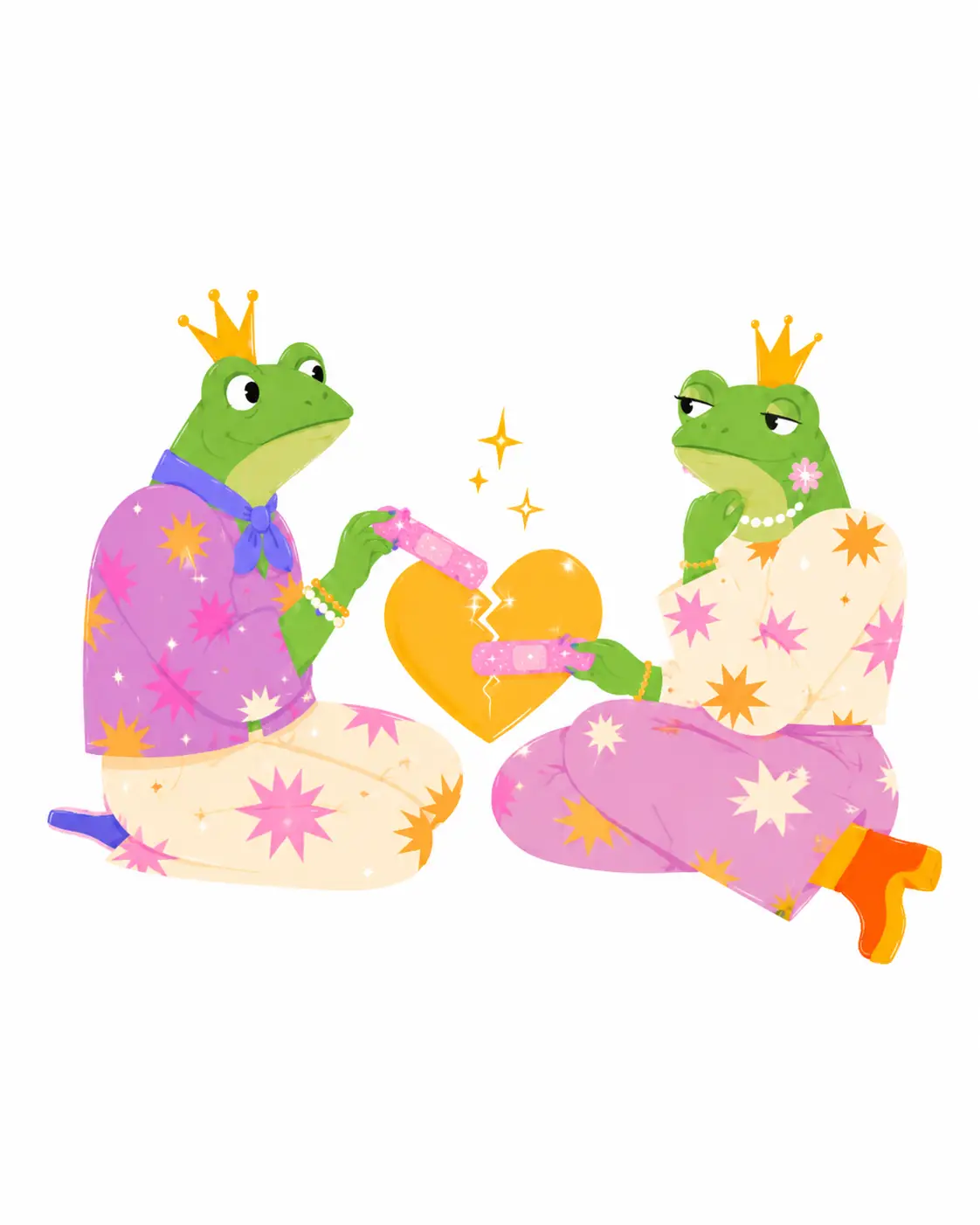
The fairy tale ends with a kiss. A marriage begins with a frog at the table, and two people brave enough not to look away.
The frog is not the end of romance. It is the entrance exam.
Which one are you tonight?
Six honest questions. Not a verdict on your relationship, and not a diagnosis. Just a mirror for whether you are the Prince who reaches, the Princess who recoils, or the Frog Princess quietly carrying the kingdom.
This cannot see your life, and it cannot make the decision for you. If anything here resonates, it is worth saying out loud to a person, not just reading on a page.
Book a free consultation
Kita Tabachka
I am a BACP-registered relational therapist working with individuals and couples on relationship anxiety, attachment, betrayal and repair. The Prince, the Princess and the frog are composites: many couples, disguised and gathered into one fairy tale, because that is often the only way to tell the truth without betraying anyone. My writing is a door into the work, never a substitute for it.
More about my practiceQuestions people actually ask me
This article is written by Kita Tabachka, MBACP, and is for general education and reflection. It describes patterns seen in clinical work, but it is not therapy, and it is not a substitute for individual advice from a qualified therapist, doctor or other professional who knows your situation.
Reading it cannot diagnose anything or replace your own judgement about what you need. If something here resonates and you would like support, you are welcome to learn more about my practice or book a free consultation. If you are in crisis or immediate danger, please contact local emergency services or an urgent mental health line in your country.
Join the conversation
Are you the one who reaches, the one who recoils, or the one carrying the whole kingdom in a tote bag? Say so. Your words may be the thing a stranger at three in the morning needed to read.